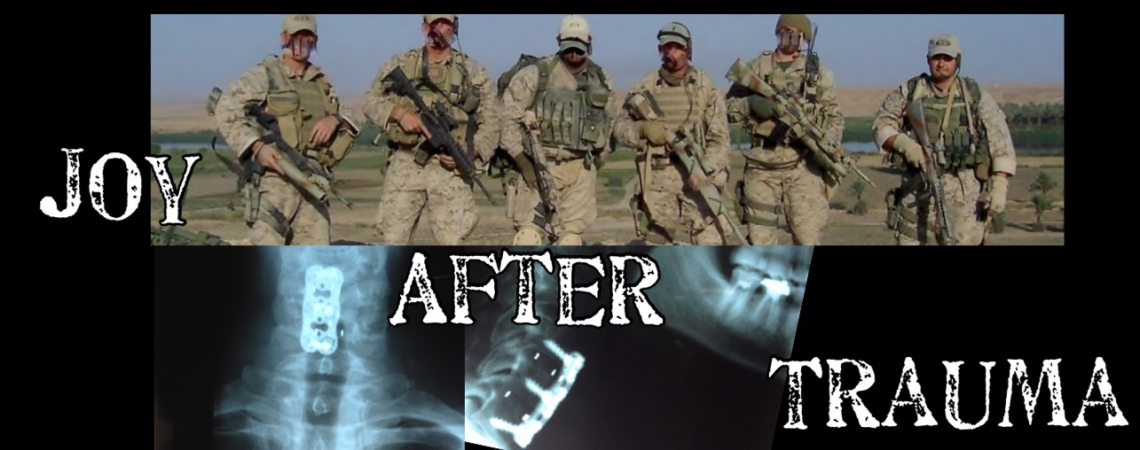

Once again I’ve been reaching into the book Once A Warrior Always A Warrior by Charles W. Hodge.
In the book there is an insightful description of how people react with the fight or flight response everyone already knows about. However there was an interesting description of the paths to fight. As we all know it comes from aggression. He described the more controlled reaction as an anger response which allows for more controlled and directed choices, I think of it like a trained fighter fights angry but still controls their own actions and knows when to stop. Then there is the rage response, with rage the person more or less looses the control of the actions and simply fights until the conquest is finished.
When I read it I had to think of the way the military trains us preparing for combat. The mold us step, by step to never allow ourselves the choice we must always respond with the fight reaction. It’s written into our doctrine of responding to any conflict in war with violence of action and overwhelming force. After a period of time our baseline which could have naturally been midway between flight and fight moves all the way to a constant state of fight on the razors edge of anger.
When I think of the questions in post deployment physicals and how councilors talk to you one of their questions is always trying to get to wether you are simply angry, numb or go into rages. It seems they already know the programming we have been subjected to and expect us to always be angry.
The way I look at it is if there where a sliding scale like a volume control with left being flight and right being fight they push us right and put mental blocks like a set screw that blocks us from ever decommissioning to our original state. On top of that the lever that is the slider is actually our pressure switch/trigger like that of a landmine or pin in a hand grenade. The longer we are exposed to stressors and combat our switch gets more sensitive like a hare trigger. I picture this visually as the switch getting smaller, like a window we observe life through. This window also gets tougher to widen and allow a more full picture of the world. It narrows our view to that of survival.
This outlook is wonderful for individuals who are constantly needing to make split second decisions reacting to life or death situations.
I always noticed people looking at me not always in fear but trying to judge my posture towards them. Nothing really ever hit me until my child asked me, “Daddy are you angry?” That was a kick in the nuts, as I never felt that way but realized finally that’s how many people perceived me. For everyone else I couldn’t care less, I have little to know care about what others think of me. But for a loved one to say that was like a knife slicing into my soul. I was thankful for that pain however, it finally opened my eyes.
There was also the condition I have explained in earlier chapters of conditioning. You see, our training teaches us how to deal with stress. We are exposed to terror and learn to anticipate it. As, we see situations evolving we are trained to begin Combat Breathing, which is actually a type of meditation. So when we see or expect anything we prepare for the worst event imaginable a 15 on a scale of 10. So when inevitably we find out the situation is a 6 out of 10 we actually have a sense of relief that overcomes us and everything seems like it’s happening in slow motion making every decision easy. It makes me think that’s why some guys get into extreme hobbies like skydiving or buying a motorcycle.
I have learned and continue to learn ways to interact with people. Ultimately part of my process is to write things down and talk to people I trust. I don’t want to ever scar family with things so I have know doubt that I will always hold things in to be my burden. But we all make sacrifices for the ones we love.
I had to let AI give me a synopsis:
The concept of “life on the edge of anger” in art refers to the creative exploration of rage, tension, and volatile emotion, and the fine line between control and eruption. This can be expressed through various mediums, from art therapy exercises to renowned works by famous painters. Artists use visual elements like color, line, and composition to portray intense internal feelings, often as a way to process, understand, and transform powerful emotions.
And if anything I ever write helps anyone else I count that as a blessing.
Most of all, this all leaves a legacy that in the future my children will read one day and understand me in a more complete way.
Ultimately my Triplets and Wife saved my life and I am forever grateful to them.


 Joy After Trauma